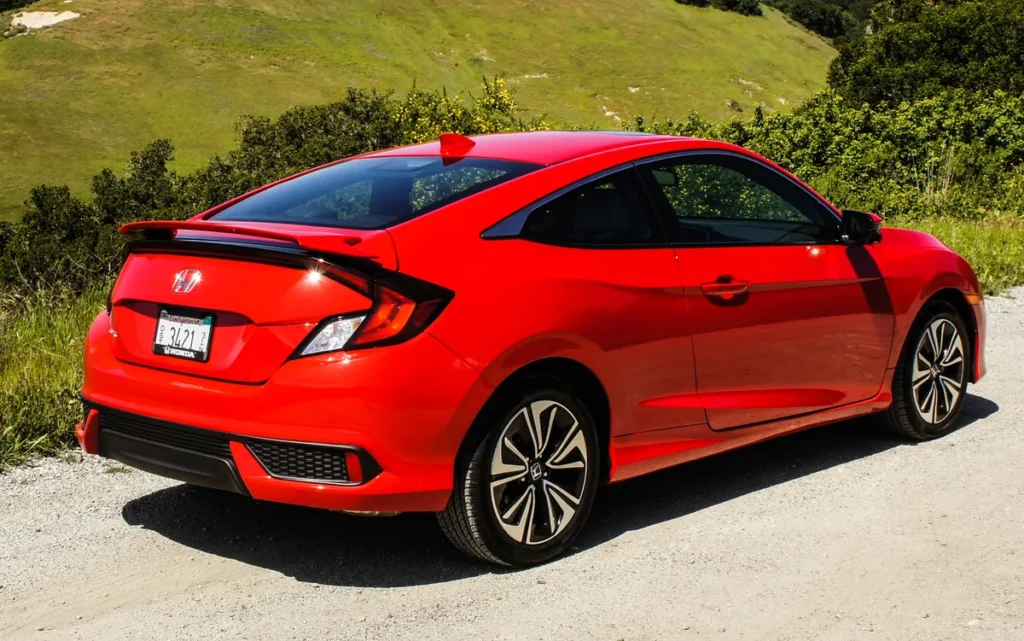

The 2016 honda civic coupe is a two-door variant of Honda’s tenth-generation Civic, offering a sportier profile without sacrificing the brand’s renowned reliability. Introduced in the middle of the decade, this model built on the Civic’s reputation for efficient everyday driving while adding a more engaged, youthful aesthetic that appealed to buyers seeking a little more style with their practicality.
From the outside, the coupe trades the sedan’s extra doors for a sleeker silhouette, a shorter wheelbase, and a slightly lower stance. Complemented by available features like larger wheels, a modern grille, and subtle body sculpting, the 2016 honda civic coupe stands out in a crowded compact segment. Inside, you’ll find a cabin that prioritizes usable space, a logical control layout, and materials that feel better than many rivals in its price range. The rear seat is comfortable enough for two adults on short trips, and the trunk offers competitive cargo for a two-door body style.
Performance and efficiency
Under its hood, the Civic Coupe offered a balance between refinement and punch. Most buyers opted for the turbocharged 1.5-liter engine available on higher trims, which delivered lively acceleration for highway merging and confident passing. The normally aspirated 2.0-liter option provided smooth power and a more traditional feel, particularly when paired with a manual transmission. Transmission choices varied by trim, with the CVT serving well for city commutes and fuel economy, while the manual appealed to those who enjoy a more involved driving experience. Overall, the drive was composed, with well-tuned steering and firm, predictable handling that made every corner feel accessible rather than intimidating.
Interior technology and comfort
Inside, the 2016 Civic Coupe offered an intuitive tech setup that kept essential information within easy reach. Depending on trim, you could find features such as a touch-screen infotainment system, Bluetooth connectivity, and steering-wheel controls that simplify media and call management. The seats emphasized support during longer drives, and the climate system kept the cabin comfortable across a range of weather conditions. Honda’s attention to noise isolation meant road and wind noise stayed at reasonable levels, further enhancing the driving experience on highways and back-roads alike.
Value, reliability, and maintenance
For buyers shopping in the used-Civic space, the 2016 honda civic coupe often represents strong value. Honda’s reputation for reliability translates into lower ownership costs when compared to many peers, and parts availability remains excellent. Routine maintenance—oil changes, tire rotation, and brake service—can help maintain strong resale value. When evaluating a late-model Civic Coupe, it’s wise to check for consistent service history, confirm there are no hidden recalls, and inspect the undercarriage for typical wear from daily driving. The model’s demonstrated durability, combined with practical fuel economy, contributes to a long-term ownership story that many buyers find appealing.
Trim and model variety
Trims for the 2016 honda civic coupe ranged from well-equipped base options to sporty, tech-oriented configurations. Larger wheels, upgraded audio, and the turbocharged 1.5-liter engine were often paired with the mid- to upper-level trims. Buyers could choose between a manual transmission for enthusiasts and a CVT for daily driving efficiency. The mixture of options allowed buyers to tailor their car toward sportiness or comfort without leaving Honda’s core values behind.
Safety and tech options
Even on 2016 models, shoppers could find incremental safety and technology upgrades. Standard features typically included essential airbags, anti-lock brakes, stability control, and traction control, with higher trims offering more advanced driver aids in some markets. For used examples, the availability of these features will depend on the trim and production date.
Buying tips for a used 2016 honda civic coupe
- Review the service history and maintenance records to confirm regular oil changes and tire rotations.
- Inspect for rust around wheel wells and underbody, and check for signs of prior collisions or frame damage.
- Test the transmission: ensure smooth shifting with a manual or CVT, and listen for unusual noises.
- Test electronics: infotainment responsiveness, Bluetooth connectivity, and climate control performance.
- Check tires and brakes: matching tread, no unusual wear, and functional braking response.
- Look for signs of prior accidents and verify recalls have been addressed.
For more car tech insights, visit the Techrolab homepage.