
In many commercial spaces, schools, and busy workshops, lighting plays a pivotal role in productivity and comfort. A fluorescent light fixture remains a reliable workhorse for broad, even illumination, especially where long hours demand consistent color rendering and strong lumen output. For builders, facility managers, and homeowners tackling renovations, understanding how fluorescent lighting works helps you choose the right setup for your space.
To start, consider this: fluorescent light fixture systems rely on gas-filled tubes and a ballast to start and regulate current. When electricity flows through the gas, it emits ultraviolet light that excites a phosphor coating inside the tube, producing visible light. Modern electronic ballasts make these fixtures quieter and more energy-efficient than older magnetic ballasts, reducing flicker and extending lamp life. This combination—efficient tubes and improved ballasts—can reduce energy consumption without sacrificing brightness, making fluorescent options a smart choice for spaces that require dependable lighting for long periods.
Why choose a fluorescent light fixture?
Fluorescent fixtures offer several practical advantages. They typically deliver high lumens per watt, meaning more light with less energy. Their broad distribution minimizes harsh shadows, which is essential in classrooms, laboratories, and retail environments. In addition, they come in a wide range of styles to fit ceilings, walls, and utility rooms—from recessed troffers to surface-mounted wraparounds and strip fixtures. For cost-conscious projects, the upfront price and the long lamp life can translate to lower operating expenses over time.
Common styles and applications
Fixtures designed for brightness and coverage include:
- Troffer lights for drop ceilings in offices and schools
- Wraparound fixtures for hallways and retail aisles
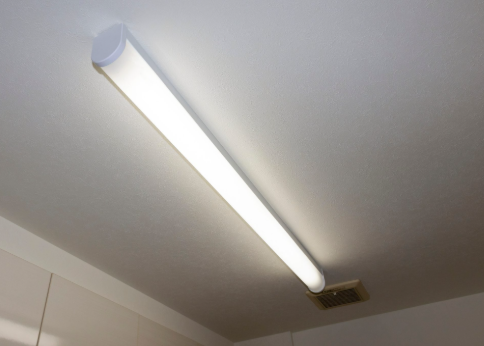
- Strip or batten fixtures for garages and workshops
- High-bay units for industrial spaces with tall ceilings
Tube options such as T8 and T5 are popular, with T8 often balancing cost and efficiency in many installations. When selecting a fixture, consider lumen output, color temperature, and CRI (color rendering index) to ensure spaces feel inviting and accurate for tasks like reading and product inspection.
Choosing the right specification
Key factors to evaluate include lamp type, ballast, color temperature, and dimming capabilities. Electronic ballasts tend to be more energy-efficient and generate less heat than older magnetic versions. Color temperatures around 3500K to 4000K provide a neutral white light that’s common in offices, while 3000K offers a warmer tone suited to hospitality spaces. If your space requires flexible lighting control, look for fixtures compatible with 0-10V dimming or modern smart controls. Finally, account for maintenance costs—easy-to-replace tubes and accessible ballasts can reduce downtime during routine service.
Maintenance, safety, and sustainability
Routine maintenance is straightforward: wipe fixtures clean to maximize brightness, replace tubes when lumen output noticeably declines, and dispose of used lamps in accordance with local regulations due to mercury content. Properly sealed fixtures protect components in dusty or humid environments, extending service life. For large facilities, scheduling periodic checks helps catch ballast or lumen-loss issues before they affect operations.
From fluorescent to modern efficiency
While fluorescent lighting remains a durable option, many organizations are transitioning to LED equivalents for even greater efficiency and longer life. However, retrofitting or selecting a high-quality fluorescent lighting system can still offer excellent performance and cost savings, especially in applications requiring broad, uniform illumination. Consider your space, budget, and long-term goals when comparing options.
For more lighting guides and product recommendations, visit the LifeFie homepage.