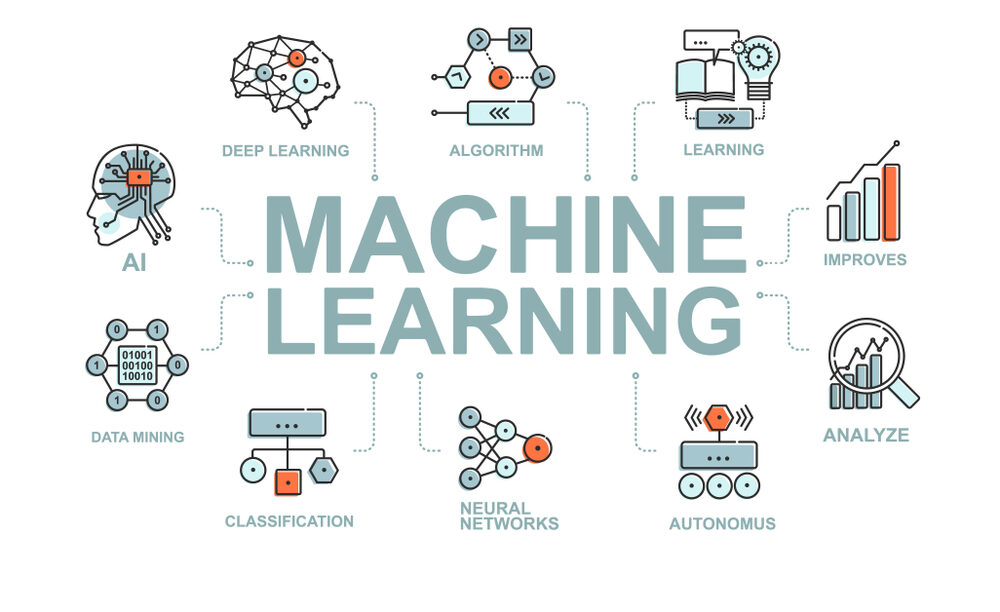

In today’s digital landscape, organizations increasingly rely on Machine Learning to turn raw data into actionable insights, automate routine tasks, and create personalized experiences for customers. The term often evokes futuristic ideas, but its value is very concrete: faster decision making, optimized processes, and the ability to scale intelligence across different functions. This guide covers what Machine Learning is, why it matters, and how teams can start leveraging it responsibly and effectively.
What is Machine Learning and how does it work?
At its core, Machine Learning is a set of algorithms that learn patterns from data. Rather than relying on explicit programming for every scenario, these models adjust their parameters as they see more examples. This capability enables systems to predict outcomes, classify inputs, and detect subtle shifts that humans might miss. From image recognition to language understanding, the scope of applications continues to expand as data collection grows and computational power becomes more accessible. For a concise overview, you can explore the topic in depth on the Machine Learning resource hub.
Why organizations invest in Machine Learning
The primary driver is return on investment through improved accuracy and efficiency. In manufacturing, predictive maintenance uses historical sensor data to forecast failures before they happen, reducing downtime and maintenance costs. In retail, ML models can forecast demand, optimize pricing, and tailor promotions to individual shoppers. In healthcare, carefully designed ML tools assist with triaging cases, interpreting medical images, and suggesting treatment options while keeping safety and ethics front and center. The common thread across industries is the ability to convert data assets into decision-ready intelligence without sacrificing speed.
Key steps to start an ML initiative
Starting with Machine Learning requires a clear plan and strong governance. First, assemble a cross-functional team that includes data engineers, domain experts, and product managers. Next, audit data quality and identify the most impactful use cases with measurable outcomes. Then, select appropriate models and experiment with a disciplined training and evaluation process. It is crucial to split data into training, validation, and test sets, monitor performance with metrics relevant to the business goal, and deploy iteratively to minimize risk. Finally, implement robust monitoring to detect data drift and model degradation, ensuring long-term reliability.
As you prototype, document assumptions, limitations, and ethical considerations. Responsible AI practices—such as transparency, fairness, and privacy protections—should guide model development and deployment. You can learn more about practical perspectives on responsible ML and governance from industry peers on resources like the Machine Learning topic pages.
Challenges to anticipate and how to address them
Common obstacles include data silos, insufficient labeled data, and the risk of overfitting. Teams can address these by investing in data pipelines, pursuing semi-supervised or transfer learning to leverage existing labeled examples, and applying regularization techniques to improve generalization. Another challenge is aligning ML outcomes with business decisions; success hinges on building trust with stakeholders through clear metrics, interpretable explanations, and demonstrable impact. Collaboration between data science and operations is essential to translate model predictions into actionable workflows that scale.
Where to go from here
Begin with a small, high-impact project that can be audited end-to-end, from data collection to deployment, and then scale based on learnings. A well-defined feedback loop—where results inform improvements and new data collection—accelerates maturity. Look for opportunities to automate repetitive, high-value tasks while maintaining human oversight for critical judgments. By prioritizing data quality, governance, and user-centric design, organizations can realize tangible gains from Machine Learning without compromising ethics or trust.
For more insights, visit Technoloss.