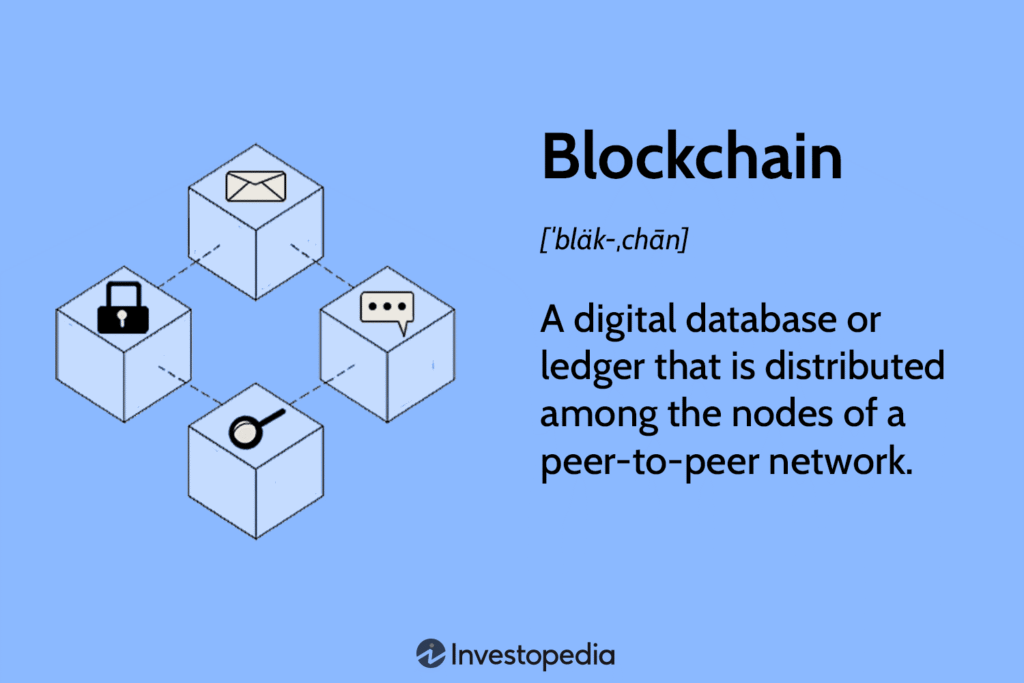

Blockchain has moved from a buzzword in tech circles to a foundational technology for trust in the digital age. At its core, Blockchain is a distributed ledger that records transactions across a network of computers. Each entry, or block, contains a timestamp, a cryptographic link to the previous block, and a set of transactions. Because the ledger is replicated on many nodes and secured by consensus, no single party can easily alter past records without it becoming obvious to everyone else. This combination of transparency and tamper-evidence makes Blockchain attractive for industries that require verifiable provenance and integrity.
The core idea of Blockchain is to create a tamper-evident ledger that remains trustworthy even when some participants act dishonestly. In most networks, volunteers or participants run software that validates new blocks and agrees on the current state of the ledger through a consensus mechanism. Public networks like Bitcoin or Ethereum rely on open participation and heavy cryptography, while private or permissioned deployments tailor rules to enterprise needs. Regardless of the model, the ledger’s immutability and the chain of blocks make it difficult for bad actors to rewrite history without detection.
Industries are discovering practical uses for this technology beyond digital currencies. In supply chains, Blockchain provides verifiable provenance by recording each handoff of a product from supplier to distributor to retailer. This visibility helps reduce fraud, improve quality control, and accelerate recalls when necessary. In finance, tokenized assets and near-instant settlement on distributed ledgers can lower costs and increase cross-border efficiency. Smart contracts—self-executing rules encoded in code—enable automated, trustless agreements that trigger payments or actions when predefined conditions are met, cutting out several layers of middlemen.
Security and privacy considerations are an essential balance in any Blockchain deployment. The properties that give ledgers their strength—transparency and immutability—can pose privacy challenges if sensitive data is broadcast publicly. To address this, organizations use encryption, off-chain storage, and privacy-enhancing techniques such as zero-knowledge proofs and private channels. Some networks adopt permissioned architectures where access rights are tightly controlled, while others pursue hybrid designs that connect private systems to public blockchains for final verification. Clear governance, data minimization, and robust auditing practices help stakeholders maintain compliance without sacrificing trust.
Adoption challenges remain pragmatic rather than theoretical. Scalability is a common hurdle; some networks process only a fraction of traditional payment rails, while others are exploring Layer 2 solutions, sharding, and more efficient consensus algorithms to boost throughput. Energy consumption is a concern for proof-of-work systems, prompting exploration of greener models like proof-of-stake. Interoperability between different blockchains is another active area of development, as organizations seek seamless data and asset transfers. Enterprises often pursue hybrid models: a private core for sensitive operations combined with public networks for broad verification and external trust.
As the technology matures, Blockchain is likely to converge with adjacent innovations such as the Internet of Things, artificial intelligence, and cloud-native services. Edge devices can record tamper-evident data, while AI analytics can detect anomalies in ledger activity and automate governance rules. Governance frameworks and regulatory guidance will continue to evolve, making audits faster and more reliable. For developers, product teams, and business leaders, the key is to start with clear objectives, chosen metrics, and a scalable architecture that aligns with risk tolerance and industry requirements. When designed thoughtfully, Blockchain can unlock new business models, improve traceability, and reduce the cost of trust across ecosystems.
For more technology insights and practical guides, visit TechZena.