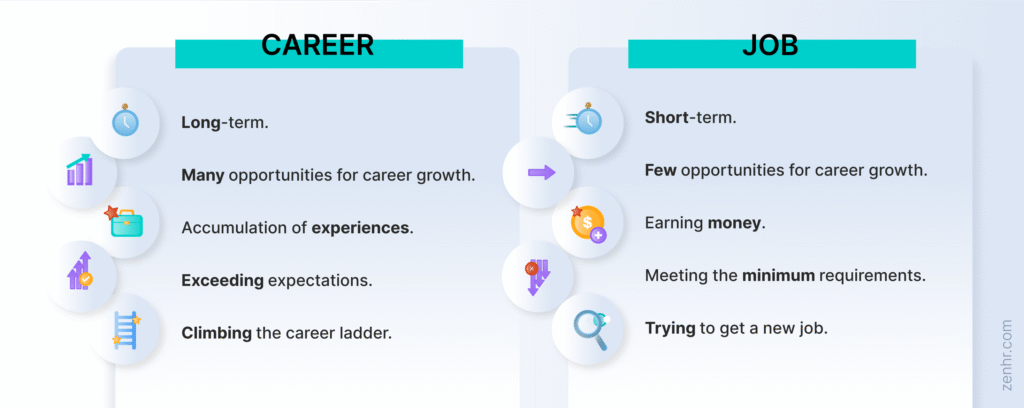

Many people treat a job as only a paycheck while a career is seen as a longer, more purposeful journey. Understanding the difference between a job and a career can change how you set goals, pick training, and measure progress. In this article, we unpack the distinctions, give practical signs to tell them apart, and offer a simple framework to plan your next steps. Whether you are starting out, considering a switch, or aiming for leadership, recognizing the mindset and expectations behind each path helps you stay motivated and focused. Clear thinking now can align daily tasks with bigger ambitions, making it easier to learn, grow, and track progress over time.
What is a job?
Put simply, a job is a specific set of tasks performed for pay within a particular organization. It tends to be focused, with defined responsibilities, hours, and benefits. Jobs can be stable and predictable, which works well if you value consistency. However, advancement can depend on promotions, openings, and internal dynamics. Some people enjoy a steady routine, while others feel boxed in after a while. If your aim is to gain practical experience quickly or support a certain lifestyle, a job can be a smart starting point.
What is a career?
A career is a broader, longer-term journey. It’s not just a single role but a sequence of positions, projects, and skills that build toward meaningful goals. Careers reward ongoing learning, adaptability, and purposeful networking. People pursuing a career often seek mentors, pursue relevant certifications, and look for roles that stretch their capabilities. They view work as a core part of their identity and life story, not merely a series of transactions. A clear career path helps you prioritize experiences, make strategic pivots, and measure progress by milestones such as new competencies, leadership responsibilities, or impact at scale.
Why the distinction matters for planning
Knowing whether you want a job or a career changes how you search for opportunities and how you measure success. For a job, focus on fit, pay, and schedule. For a career, prioritize skill-building, visibility, and alignment with long-term goals. Translate short-term steps into long-term outcomes—what experiences will move you from your current position to your target scenario in five or ten years? Regular reviews help you stay on track and avoid quick wins that don’t contribute to growth. With a career lens, your resume becomes a living story of growth and impact.
How to bridge the gap
Start with clarity. List your values, strengths, and interests, then sketch a possible trajectory on one page. Identify the critical skills for your target roles and plan a practical timeline to learn them. Seek mentors who can offer guidance and introductions. Invest in courses, certifications, side projects, and cross-functional assignments that demonstrate progress. Treat each position as a stepping stone rather than a final destination, and build a small portfolio of outcomes that you can share with future employers. Finally, set checkpoints every few months to reassess, adjust goals, and celebrate milestones. For more resources, visit the Readixt homepage.
Takeaway
Bottom line: a job can be a stepping stone, while a career is a long-term story you actively write. By understanding the difference and planning with intention, you can choose opportunities that build skills, expand networks, and align with your deepest goals. Start now, stay curious, and let progress guide you.