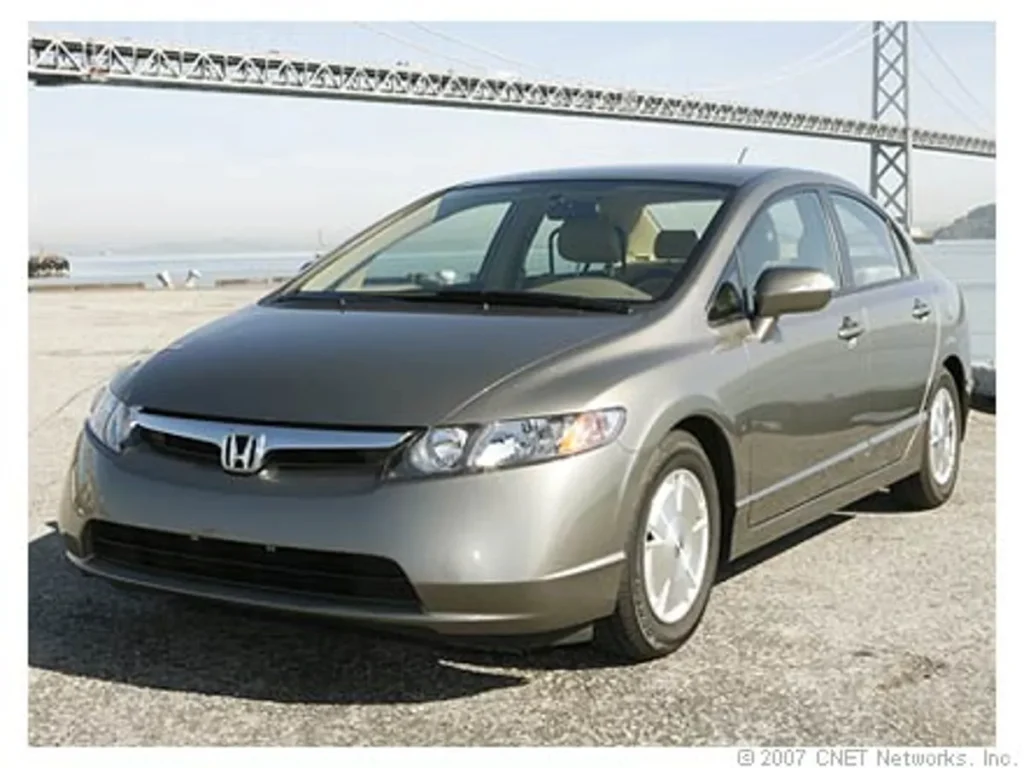

The 2007 Honda Civic Hybrid represents a notable milestone in the evolution of compact hybrid cars. This model pairs Honda’s well-known reliability with a hybrid system that was designed for real-world commuting, not just laboratory tests. For a concise overview of its specifications and practical performance, see the dedicated page: 2007 honda civic hybrid.
Powertrain and efficiency: At the heart of the Civic Hybrid is a 1.3-liter gasoline engine paired with an electric motor and Honda’s Integrated Motor Assist (IMA) system. The combination is designed to provide smooth transitions between power sources, particularly in stop-and-go traffic. The transmission is a CVT that helps keep engine revs low while sustaining acceleration when needed. On the highway, the car tends to settle into a steady rhythm that favors efficiency without sacrificing comfort. The overall result is a compact car that earns its keep in daily commutes and weekend errands alike.
Real-world fuel economy and driving experience: In urban driving, the hybrid shines, often delivering around 40-50 miles per gallon depending on load and climate. On longer trips with steady speeds, many drivers report better numbers, approaching the mid-50s under favorable conditions. The ride remains composed for a compact car, with adequate sound insulation and light steering that makes it easy to park and maneuver in city environments. If you value low operating costs without sacrificing everyday practicality, this Civic Hybrid remains a strong contender among older hybrids.
Interior, space, and features: The Civic’s cabin emphasizes practicality. Front seats offer comfortable support for daily commutes, and the rear seats fold to expand cargo space when needed. The hybrid battery is typically located under the rear seat, which helps keep the trunk usable for groceries and luggage. Basic amenities of the era—air conditioning, a straightforward stereo system, and a clear instrument cluster—combine with safety features that include multiple airbags and ABS. The overall build quality remains solid, contributing to a sense of reliability that many buyers expect from a Honda badge.
Maintenance considerations and reliability: Honda’s track record for durable powertrains helps the Civic Hybrid hold its value. Still, as with any aging hybrid, potential issues can surface around the battery state of health or the IMA electronics. Regular service by technicians familiar with hybrid drives is important, and keeping an eye on brakes is wise due to regenerative braking wear. Costs can vary, but with a well-documented service history, owners often experience dependable operation without dramatic surprises. Parts availability for the 2007 model year remains reasonable, thanks to broad Honda support and a large used-car ecosystem.
Used-car considerations and value
Prices for the 2007 honda civic hybrid on the used market vary by mileage, condition, and location, but the model typically remains affordable for drivers looking to reduce fuel costs without stepping into the latest generation. Prospective buyers should verify service records, inspect tires and brakes, and test the hybrid system during a road test. A vehicle history report helps identify any prior battery service, recalls, or maintenance concerns. Because the technology is proven and the Civic platform is well-regarded, many owners enjoy dependable ownership with moderate depreciation relative to newer hybrids.
For more information on related models and to explore further Honda hybrids, visit the homepage.